
And yet, Thailand’s next chapter cannot rely solely on the economic engines that have powered its previous decades of growth. With a projected GDP rise of only 1.6% in 2026 combined with a K-shaped economy, a constrained domestic demand, demographic change and relatively modest productivity increase, the country is seeking to attract investment, technology and talent into a new generation of industries.
Country Reports’ special feature on Thailand will provide cutting-edge analysis, fresh insights and perspectives on these sectors and topics, based on our exchanges with local government and business leaders. Distributed exclusively on NEWSWEEK.COM reaching a vast readership of 71.2 million+, our special Thailand edition will be also promoted through a special box banner running though Newsweek’s webpages for a week ensuring large visibility and awareness for the reader.
A MANUFACTURING HUB
From manufacturing hub to technology and green manufacturing platform
Known as the “Detroit of Asia,” Thailand is a leading regional production and export hub for motor vehicles. As global supply chains are being reshaped, its established manufacturing base gives it an important advantage. Manufacturing accounts for approximately one-quarter of the country’s GDP and supports millions of jobs, creating a substantial industrial platform from which to move into higher-value production. Electronics, electric vehicles, batteries, smart appliances, renewable energy equipment and other advanced manufacturing activities offer Thailand the opportunity to capture more value from global supply chains while responding to the worldwide shift toward electrification and lower-carbon production.


DIGITAL ECONOMY
Fast tracking digital transformation
The country’s digital transformation is equally significant. Data centers and digital infrastructure have rapidly emerged as major investment hotbeds, reflecting growing demand for cloud computing, AI and digital services across Southeast Asia. In the first nine months of 2025, digital-sector investment applications reached approximately US$18.8 billion, with large-scale data-center projects accounting for the overwhelming majority. This suggests that Thailand is increasingly positioning itself not only as a manufacturing base, but also as infrastructure for the region’s digital economy.
AGRIBUSINESS
Thailand ranks first in ASEAN and eighth globally for agricultural exports
A major global producer of rice, rubber, poultry, sugarcane, corn and coconuts, Thailand agriculture contributes close to 10% of GDP, but employs around 30% of the workforce. Creating higher-value products will be necessary to close that gap, sketching a major opportunity for food processing investment. Packaged foods, animal feed, biotechnology and agricultural technology in particular represent strong potential. This combination of strong agricultural production, export-oriented supply chains and sophisticated food processing are what makes agribusiness a strategic area for investment and further development in Thailand.


BEYOND TOURISM: WELLNESS & MEDICAL TOURISM
The country’s medical excellent will soon outperform the attractiveness of its beaches
Tourism is a major pillar of the economy and has experienced a strong post-pandemic recovery, with close to 40 million visitors annually. Alongside traditional leisure tourism, medical and wellness tourism are becoming increasingly important higher-value segments, supported by Thailand’s internationally recognised hospitals, private healthcare infrastructure, spa industry and established reputation for Thai massage and holistic treatments. In 2024, Thailand’s wellness economy was valued at approximately US$42.7 billion, while wellness tourism alone generated around US$14.1 billion and grew 36.4% year-on-year, demonstrating particularly strong demand for health, relaxation and preventative-care experiences. This diversification allows Thailand to move beyond high-volume beach and cultural tourism towards longer-stay and higher-spending visitors, with the government increasingly promoting medical excellence, preventive healthcare, longevity and wellness as part of its broader tourism strategy.
RENEWABLES
Green Energy & the Low-Carbon Transition
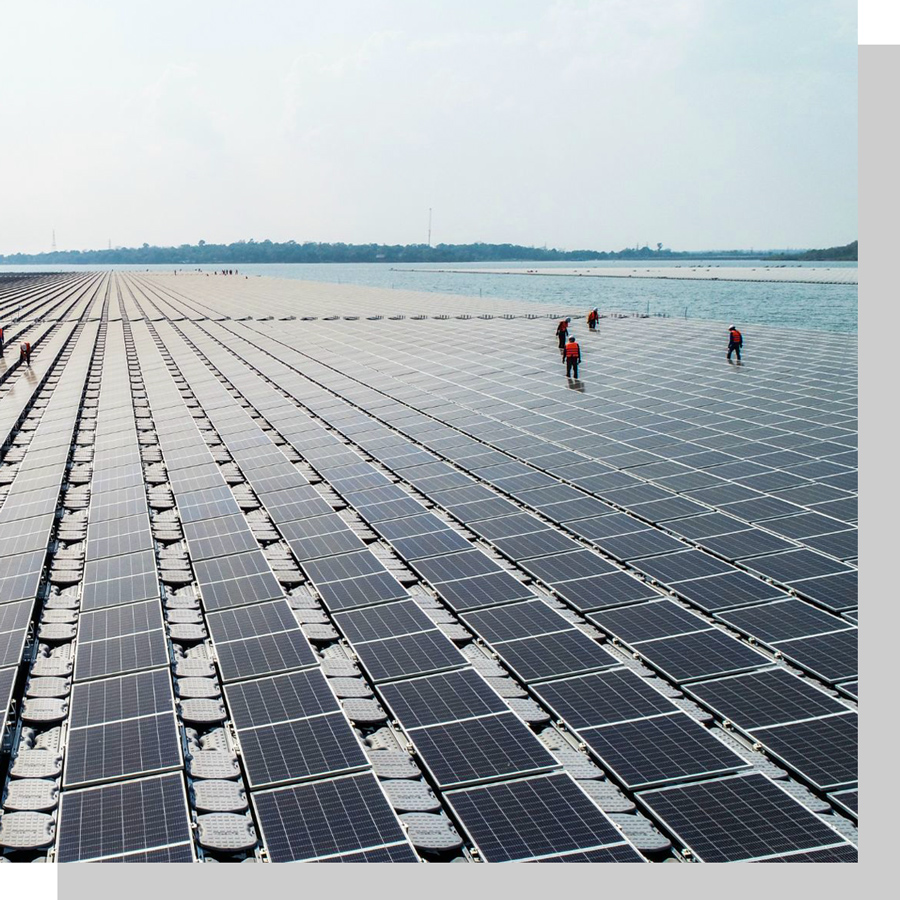
At the core of Thailand’s national industrial strategy is the Bio-Circular-Green economic model, designed to achieve carbon neutrality by 2050 and net-zero emissions by 2065. Under its updated Power Development Plan, Thailand targets generating 50 percent of its electricity from renewable sources by 2050.
The country boasts Southeast Asia’s largest hydro-floating solar hybrid projects across its hydroelectric dams and is aggressively expanding utility-scale solar, biomass and offshore wind power. To incentivize clean tech, the government offers lucrative corporate tax exemptions and renewable energy tariffs for green power purchase agreements. A new Utility Green Tariff framework also allows corporations to source certified renewable energy. These initiatives are attracting billions in foreign green capital, establishing Thailand as a regional benchmark for sustainable industrial parks, battery energy storage systems and carbon credit trading.

BANKING & FINTECH
Banking, Fintech & the Digital Financial Revolution
Thailand is setting global standards in financial technology and cashless adoption. Its flagship real-time national payment platform, PromptPay, handles over 2.38 billion monthly transactions valued at 4.45 trillion baht (over $125 billion), with more than 82.9 million registered user profiles. Over 92 percent of the population utilizes digital payments, making Thailand one of the world’s most cashless societies. Crucially, Thailand is pioneering borderless finance: cross-border QR payment interconnections now process billions of baht from tourists and merchants across China, Malaysia, Singapore and Laos. With the Bank of Thailand launching greenfield virtual banking licenses and establishing open-banking frameworks, the kingdom’s financial sector presents unparalleled opportunities for fintech innovators, payment infrastructure providers and global digital banking pioneers.
Special Feature for Newsweek
Country Reports’ special feature on Iceland will provide exclusive insights, analysis and fresh perspectives on these topics, based on our team’s exclusive exchanges with top political and business leaders.
Distributed exclusively on Newsweek.com reaching a vast readership of 95 million, our special feature will be promoted both through a banner placed on Newsweek’s homepage for a week, and a full-page article inserted in Newsweek’s international print edition ensuring large visibility and awareness for the reader.
The feature on Iceland will also be hosted in the Newsweek library (www.newsweek.com/newsweek-country-reports) for two full years.