
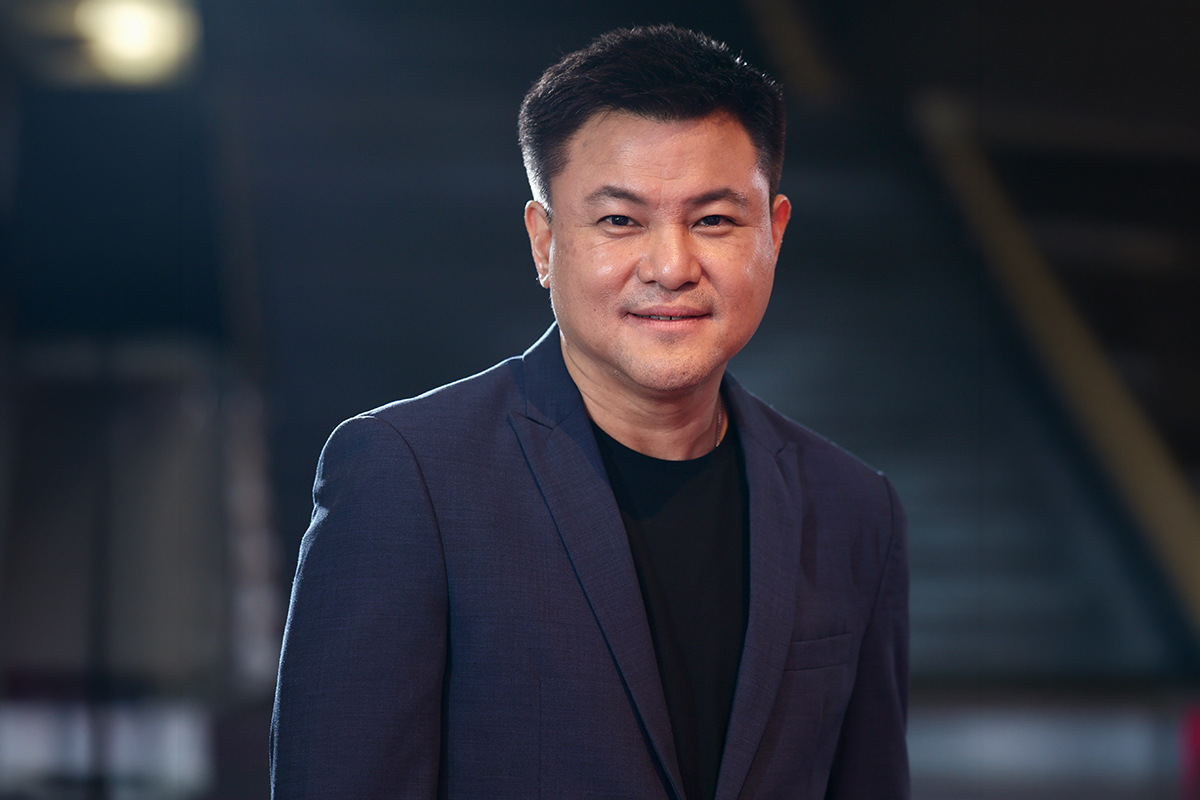
30 Sep Interview with Mr. Takonkiet Viravan, CEO The One Enterprise (ONEE)
Thailand’s entertainment and media industry continues to expand, with PwC forecasting the market to reach around $16.3 billion in 2026. You’ve highlighted how Thailand’s distinctive local culture and rapid adoption of new digital channels have helped drive this growth. Given your more than three decades in the industry, how have you seen Thailand’s creative sector evolve and how has the business environment become more supportive of major media and entertainment companies?
Over the past 30 years, the industry has changed dramatically. When I started in 1990, Thailand had only four television stations. Then, in 2014, the government introduced digital television and opened the market for private companies to bid for licenses. The number of channels quickly grew from around five or six to more than 20. At the same time, social media was transforming how people consumed content. We started by producing television dramas and sitcoms and renting time slots from existing stations.
In 2014, we bid for our own channels and won two: one HD and one standard-definition channel. It was a challenging time because competition had increased so dramatically. We focused on what we did best: television dramas. That became the showcase of our channels and within a few years, we were among the top 3. The key to our success was constantly adapting our content to changing audiences. It wasn’t just about competing with more than 20 television channels; we also had to compete with social media. We were one of the first television stations in Thailand to make our dramas available online for catch-up viewing. That was unheard of at the time. Today, catch-up viewing and streaming are standard. We have been adapting continuously and that has helped us remain one of the top three.
Now, streaming platforms are becoming increasingly popular, while traditional television audiences are declining. Television is still important though, because it provides a trusted, official way for countries to communicate with their people, whereas social media can diffuse a large amount of different information and it can be difficult to know what is true. Entertainment has also changed. In the past, you had to watch a program at a specific time, usually for free with advertising. Now, through streaming, you can watch whenever and wherever you want. There are different models, such as AVOD—advertising-supported video on demand—and SVOD, where viewers pay a subscription to watch without advertising. Both creators and audiences are adapting.
What is particularly interesting is how Asian content is reaching global audiences, such as Korean dramas for instance that succeeded just by offering what Korea does best and not by trying to mimic Hollywood dramas. This opens the world to different cultures and stories. When you ask tourists what they like most about Thailand, the top two answers are usually the people and the food. The appeal of the people comes from our unique “Thainess” and that gives our entertainment industry a real opportunity to reach global audiences. People today are much more open to different cultures. Korea has shown how successful this can be and Thailand has the same potential. We have our own culture, emotions, perspectives and stories. The challenge is to translate that “Thainess” into content that global audiences can understand and relate to.
We have already seen this with Thai Boys’ Love (BL) series. Thailand was an early leader in the BL genre.Today, many of our series and artists have gained audiences across Asia, Europe and the Americas and GMMTV, one of The One Enterprise’s subsidiary companies, is the pioneer in producing BL series in Thailand. Our stars now travel internationally for fan meetings, concerts and events, creating new opportunities for merchandise and other parts of the creative economy. Our artists and talents can become ambassadors for Thailand. They can help us share our culture with the world while creating significant economic value.
The One Enterprise has transformed and grown from a content production company into one of Thailand’s leading integrated media and entertainment players. Today, the company operates across three core business groups: content marketing, idol marketing and production. In 2025, the company laid the groundwork for its comprehensive “New S-Curve” long-term strategy, including a greater focus on niche categories and deeper audience engagement through its oneD platform. What are the cornerstones of the “New S-Curve” strategy and how is it positioning The One Enterprise to capitalize on changing entertainment trends in Thailand and internationally?
As television audiences decline, we need a new home and that home is streaming. International platforms are excellent for taking Thai content overseas, but there are limitations in what we can create for both global and Thai audiences. That’s why we need our own streaming platform, built around the types of dramas we have been producing for the past 30 years, while adapting them to today’s audiences and making them more accessible internationally.
Our competitive advantage is ‘’Thainess’’—but ‘’Thainess’’ for today. Even when we produce historical dramas, they need to connect with modern audiences. The goal is to create stories that appeal to Thai viewers while also having universal themes that can travel internationally. This is our new S-curve. A streaming platform gives us more freedom to experiment, adapt and explore new types of content.
The One Enterprise has been behind a wide range of celebrated television and theatre productions, including the hit Girl From Nowhere, which reached number one on Netflix in several countries. Over your years as a producer, which productions do you believe best represent The One Enterprise’s creative identity and capabilities and which are you personally most proud of?
Girl From Nowhere was a big hit and we were very proud of it. Another series, Wan-tong, became a major success on iQIYI, the Chinese streaming platform. It was based on Thai folklore, but we approached the story from a different perspective. We never expected it to travel internationally, so its success surprised us. Our actors and actresses are also reaching audiences around the world. They perform for thousands of fans in Japan, Brazil, Mexico, the United States, Europe and elsewhere. These talents can become cultural ambassadors for Thailand.
The One Enterprise is increasingly adopting digital technology and AI across its operations, from transforming production capabilities to creating new ways for fans to engage with artists. According to PwC, Thailand’s entertainment and media growth is increasingly being driven by investment in digital segments, including online video and video gaming. How is the digital age reshaping Thailand’s wider entertainment industry and which digital technologies are having the greatest impact on The One Enterprise, both behind the scenes and in the way audiences engage with its content and artists?
I still believe in the power of real actors and actresses because of the emotional connection they create with audiences. AI is being used for special effects, or making visuals and sounds that are too difficult to create from reality. We are only at the beginning stage to explore short-form vertical dramas with pure AI. For me, that is another artistic option, not unlike animation, but it can’t replace real talent totally.
Behind the scenes, we are also expanding our physical production facilities. We own ACTS Studios, a 15-acre movie studio in Pathum Thani, with four sound stages and several practical sets. We have already hosted several international productions, including The White Lotus, which filmed many of the interior scenes at our studios. We want to attract more international productions to Thailand. The government offers attractive incentives and Thailand provides competitive costs, excellent crews and a great experience for international filmmakers. They can come to work—and enjoy a holiday in our exotic country at the same time.
Thailand stands out as a filming location, because of the location itself, the highly efficient and professional crews, competitive labor costs and of course, the attractive incentives from the government.
The One Enterprise works with a talent base of more than 300 artists alongside the production and creative teams behind its content. The company also maintains a broad ESG strategy with a strong focus on community engagement. What makes Thailand stand out in terms of its creative talent, both on-screen and behind the scenes and how is The One Enterprise helping develop the next generation of artists and entertainment professionals?
Creative people have to evolve with their audiences because change is constant. We are giving younger generations more opportunities, listening to them and bringing them into both behind-the-scenes and on-screen roles. We help them develop their skills in acting, singing, dancing and performance, encourage them to retain what makes us uniquely Thai, while at the same time, making sure they bring out the best of themselves. One global star I really admire is Lalisa Manobal. She has become a global icon, but she has never forgotten that she is Thai. Wherever she goes, she proudly represents Thailand. That’s the kind of talent and “Thainess” we want to see.
You have built a career spanning more than 30 years in television and entertainment, becoming one of Thailand’s most established industry leaders. Today, you are helping steer The One Enterprise as it embraces new digital platforms, audience models and opportunities for international growth. What are your top priorities as CEO of The One Enterprise and what long-term vision do you have for the company?
OneD’s streaming platform will be a major attraction for Thai audiences, while also helping our content travel internationally. Our long-term goal is to develop more artists and stories that can go global. What’s important is combining ‘’Thainess’’ with universal themes. Many internationally successful series from different parts of the world have strong cultural identities and that is something we aim to achieve as well. We look for people who are open to new ideas, understand global trends and can adapt to a changing world.
What’s your final message to the readers of Newsweek?
The biggest advantage of Thai entertainment is our “Thainess”—the culture that has attracted people from around the world to Thailand. Entertainment can play an important role in sharing that message and inspiring people to visit. We want to be part of that.